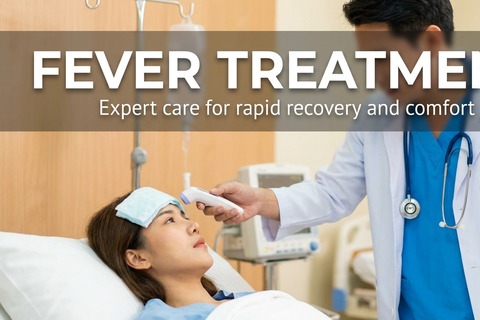
Quick answer: A fever is a temperature of 100.4°F (38°C) or higher. Go to the ER right away for any fever in a baby younger than 3 months. For older babies and children, urgent care is a good choice for a fever that lasts more than 2 to 3 days, comes with ear pain, sore throat, painful urination or a rash, or a child who seems unwell. Go to the ER for trouble breathing, a seizure, a stiff neck, unusual sleepiness or signs of dehydration.
A fever can be scary, especially in the middle of the night. But fever itself is usually the body’s normal way of fighting infection. What matters most is your child’s age and how they look and act.
New to PACS? Start with our complete guide to urgent care in Alexandria, VA.
How to take your child’s temperature
- Under 3 months: A rectal temperature is the most accurate.
- 3 months to 3 years: Rectal, or a forehead (temporal) thermometer.
- 4 years and older: Oral, ear or forehead thermometer.
Write down the reading, the time, and any fever medicine you gave. Bring this to the visit.
What to do by age
Younger than 3 months
Any temperature of 100.4°F or higher needs medical care right away. Go to the ER or call your pediatrician immediately. Young babies can get serious infections quickly, and they need tests that are done in a hospital.
3 to 6 months
Call your pediatrician or come to urgent care for a fever of 102°F or higher, or any fever if your baby is fussy, not feeding well or seems sick.
6 months and older
If your child is drinking, playing at times and acting fairly normal when the fever comes down, you can usually watch at home. Bring them to pediatric urgent care if:
- The fever lasts more than 2 days in a child under 2, or more than 3 days in an older child
- The fever is 104°F or higher
- They have ear pain, sore throat, painful urination or a new rash
- They’re unusually cranky or hard to comfort
- The fever went away and came back
Go to the ER or call 911 if your child
- Is younger than 3 months with a fever of 100.4°F or higher
- Has trouble breathing or is breathing very fast
- Has a seizure
- Is very hard to wake, limp or confused
- Has a stiff neck or severe headache
- Has a rash that looks like small bruises or doesn’t fade when pressed
- Shows signs of dehydration: very few wet diapers, no tears, a very dry mouth
- Has a weak immune system or a serious medical condition
See more ER warning signs in our full guide.
What happens at urgent care
A provider examines your child and checks the ears, throat, lungs and skin. Depending on symptoms, they may run rapid tests for flu, COVID-19, RSV or strep, or a urine test. PACS offers fever evaluation with on-site testing 7 days a week. Learn more about when to take your child to urgent care.
Caring for a fever at home
- Offer fluids often. Watch for dehydration in kids.
- Dress your child in light clothing.
- Use acetaminophen or ibuprofen if your child is uncomfortable, dosed by weight. Don’t give ibuprofen to babies under 6 months unless a doctor says to.
- Never give aspirin to children or teens.
- Let your child rest. You don’t need to wake a sleeping child to give fever medicine.
Frequently asked questions
What temperature is too high for a child?
For babies under 3 months, 100.4°F or higher always needs care. For older children, how your child acts matters more than the number, but a fever of 104°F or higher should be checked.
Can a fever cause brain damage?
Fevers from infection don’t cause brain damage. Very rarely, some young children have a brief seizure with fever. Seek care right away if that happens.
Does PACS see babies?
Yes. PACS sees infants through teens. For babies under 3 months with a fever, go to the ER.
Get care today at PACS Urgent Care
PACS Urgent Care – Alexandria
3481 N Beauregard St, Alexandria, VA 22302
Open 7 days a week, 8 AM – 8 PM · Walk-ins welcome
Call (571) 656-8838 · Get directions · New patient guide
This article is for general information and isn’t a substitute for medical advice. If you think you’re having a medical emergency, call 911.