
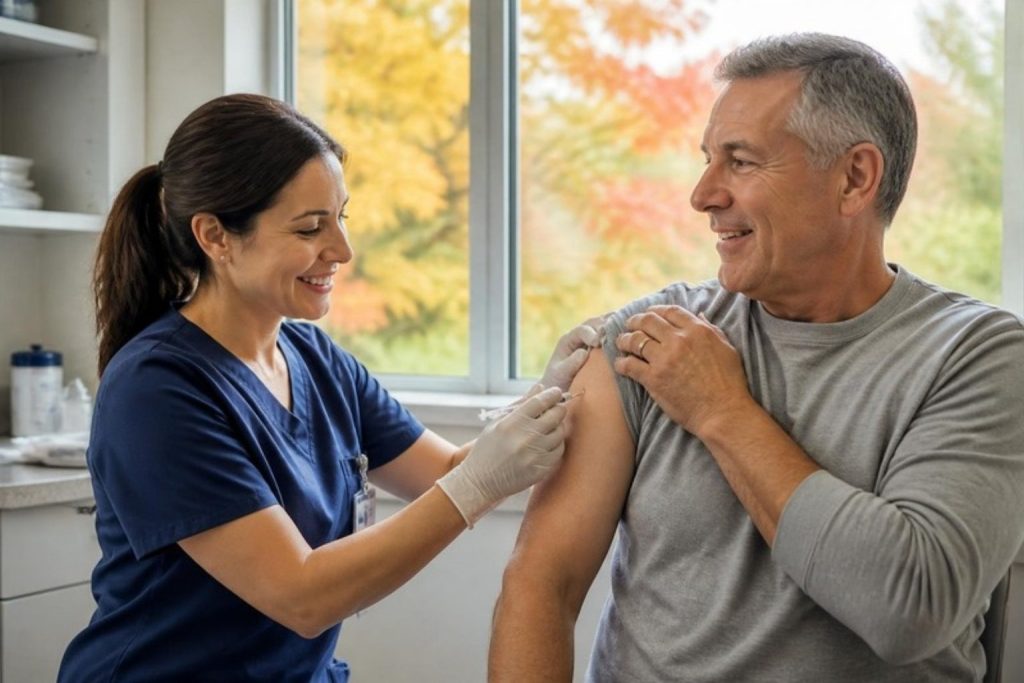
Quick answer: The CDC recommends a yearly flu shot for almost everyone 6 months and older. The best time to get it in Virginia is September or October, before flu peaks between December and February, but getting it later still helps. It takes about 2 weeks to build protection. PACS Urgent Care offers walk-in flu shots in Alexandria and Ruther Glen, no appointment needed.
The flu shot is the single best way to lower your chance of getting the flu, and to make it milder if you do. This guide covers when to get it, who needs it, which type is right for you and where to get one in Virginia.
When should I get a flu shot?
Aim for September or October. In Virginia, flu usually starts rising in November and peaks between December and February (see our Virginia flu season tracker). Because your body needs about 2 weeks to build antibodies, getting vaccinated by the end of October means you’re protected before cases climb.
Missed October? Get it anyway. Flu can circulate into May, so a shot in November, December or even January still protects you.
Who needs a flu shot?
The CDC recommends a flu vaccine every season for everyone 6 months and older, with rare exceptions. It’s especially important for people at higher risk of flu complications:
- Adults 65 and older
- Children under 5 (see flu shots for kids)
- Pregnant people (protects the baby for months after birth, too)
- People with asthma, diabetes, heart, lung or kidney disease
- Anyone with a weakened immune system
- Health care workers and caregivers of babies or older adults
Why do I need one every year?
Flu viruses change from season to season, and protection from the vaccine fades over time. Each year’s vaccine is updated to match the strains expected to spread.
Types of flu vaccine
| Type | Who it’s for |
|---|---|
| Standard-dose shot | Most people 6 months and older |
| High-dose, adjuvanted or recombinant shot | Preferred for adults 65 and older |
| Nasal spray (live attenuated) | Healthy, non-pregnant people ages 2 to 49 |
Not sure which is right for you? Our providers will recommend one at your visit.
Who should talk to a provider first?
- People who had a severe allergic reaction to a previous flu vaccine
- Anyone who developed Guillain-Barré syndrome within 6 weeks of a past flu shot
- People who are currently sick with a moderate or severe illness (wait until you feel better)
An egg allergy alone is no longer a reason to skip the flu shot.
Does the flu shot really work?
Effectiveness varies each season, but in years when the vaccine matches circulating strains, it lowers the risk of a doctor visit for flu by roughly 40 to 60 percent. Just as important, vaccinated people who still catch the flu tend to have milder illness and are less likely to be hospitalized.
Worried about side effects? Read flu shot side effects and myths. Want to save a trip? You can get your flu and COVID shots at the same visit.
Where to get a flu shot in Virginia
PACS Urgent Care offers walk-in flu shots 7 days a week at our Alexandria clinic and our Ruther Glen clinic. Most insurance plans cover the flu shot at no cost to you. See flu shot cost in Virginia for details. Employers can also set up workplace flu shots for their teams.
Frequently asked questions
Is it too late to get a flu shot?
No. As long as flu is circulating, usually into spring, the vaccine can still protect you.
How long does a flu shot last?
Protection lasts for about one flu season, which is why the CDC recommends a new shot every year.
Can I get a flu shot if I have a cold?
A mild cold is usually fine. If you have a fever or feel quite sick, wait until you’ve recovered.
Do I need an appointment for a flu shot at PACS?
No. Walk in during open hours or check in online to save your spot.
Where can I learn more?
See the CDC’s flu vaccine guidance at cdc.gov/flu and the Virginia Department of Health at vdh.virginia.gov.
Get care today at PACS Urgent Care
Walk in or book online at our Alexandria flu clinic (3481 N Beauregard St, open 7 days, 8 AM to 8 PM) or book at our Ruther Glen flu clinic (17067 Merchants Dr, Monday to Friday 8 AM to 8 PM, Saturday and Sunday 9 AM to 5 PM). Prefer to stay home? Start with a telemedicine visit.
This article is general information and is not a substitute for advice from your own clinician.


