
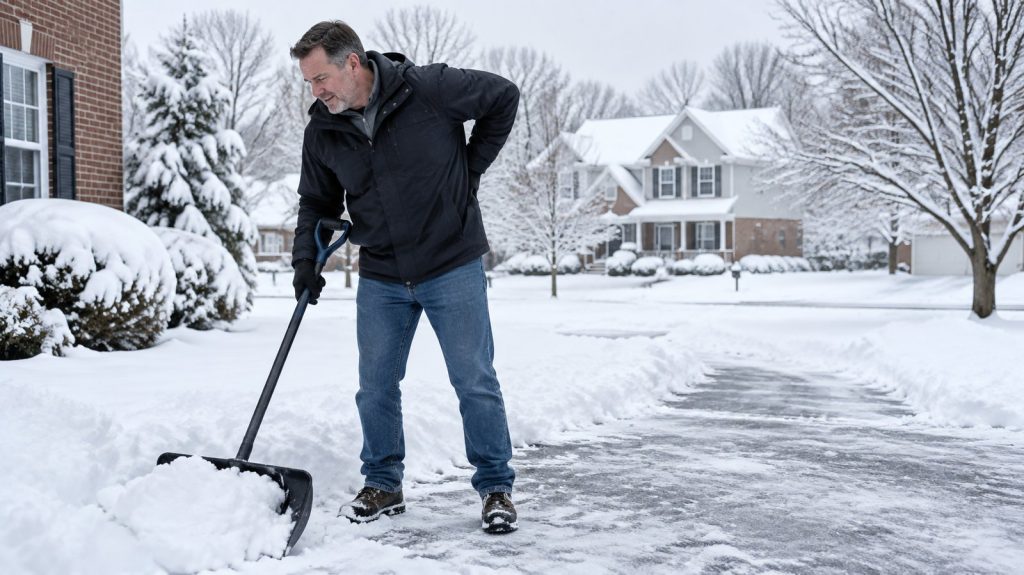
Quick answer: Winter brings its own set of injuries: back strains from shoveling snow, wrist and ankle injuries from slipping on ice, and bumps and bruises from sledding. Most of these can be treated at urgent care, where PACS offers on-site X-ray to check for fractures. But chest pain, shortness of breath or dizziness while shoveling can be a heart attack. Stop and call 911.
When snow and ice hit Northern Virginia and Caroline County, our clinics see the same injuries again and again. Here’s how to prevent them, and what to do if you get hurt.
Snow shoveling injuries
Back strain
Shoveling heavy, wet snow means lifting, twisting and throwing, often with cold, stiff muscles. That’s a recipe for a pulled back muscle. Signs include pain and stiffness in the lower back that’s worse when you move, and muscle spasms.
Prevent it: Warm up for a few minutes first. Push snow instead of lifting it when you can. If you must lift, bend your knees, keep the load small and avoid twisting. Take breaks.
Get seen if: the pain is severe, doesn’t improve after a few days, or comes with numbness or weakness in your legs. Learn more about back pain treatment.
Heart strain: know the warning signs
Shoveling is hard work, and cold air makes your heart work even harder. The American Heart Association warns that it can trigger heart attacks, especially in people who aren’t usually active or who have heart disease, high blood pressure or diabetes. Stop shoveling and call 911 if you have:
- Chest pain, pressure or tightness
- Pain spreading to the arm, jaw, neck or back
- Shortness of breath, a cold sweat, nausea or lightheadedness
Don’t drive yourself, and don’t wait it out. Read more in chest pain: urgent care or ER?
Slips and falls on ice
When you fall, your first instinct is to put your hand out. That’s why wrist fractures are one of the most common winter injuries. Other common injuries include:
- Sprained or broken ankles
- Hip and tailbone bruises or fractures, especially in older adults
- Elbow and shoulder injuries
- Bumps to the head
Prevent it: Wear boots with good tread, take short, flat-footed steps (“walk like a penguin”), keep your hands out of your pockets, and salt or sand steps and walkways.
Is it sprained or broken?
It can be hard to tell. Get it checked if you have:
- Swelling or bruising that comes on quickly
- Pain when you press on the bone
- Trouble putting weight on it or using it
- A bump, bend or odd shape
At PACS, our providers can examine you and take a walk-in X-ray on site, then splint the injury if needed. See our guide to sprain vs. broken bone and our broken bone care.
Sledding and winter sports injuries
Sledding, skiing and ice skating lead to cuts, sprains, broken bones and head injuries every winter. Choose sledding hills away from trees, roads and ponds, go feet first, and have kids wear a helmet. Got a cut? See does my cut need stitches?
Head injuries: when it’s an emergency
Go to the ER or call 911 after a head injury if the person passed out, has a worsening headache, repeated vomiting, confusion, slurred speech, a seizure, or unequal pupils, or if they take blood thinners. For a mild bump without these signs, watch them closely for 24 hours.
First aid for winter injuries
- Rest the injured area
- Ice it for 15 to 20 minutes at a time, with a cloth between the ice and your skin
- Compress with an elastic bandage if it’s swollen
- Elevate it above your heart
Frequently asked questions
Can urgent care X-ray a wrist or ankle?
Yes. PACS has digital X-ray at both our Alexandria and Ruther Glen locations, so you can be X-rayed and treated in one visit, no referral needed.
Should I go to urgent care or the ER for a fall?
Urgent care is a good choice for sprains, simple fractures, cuts and mild bumps. Go to the ER for a bone poking through the skin, an obviously deformed limb, a hip injury where someone can’t stand, or any serious head injury.
Can I get a work note for a winter injury?
Yes. We can provide a doctor’s note. If you were hurt on the job, see our Virginia workers’ comp guide.
Where can I learn more?
See winter weather safety tips from the CDC and snow shoveling heart safety tips from the American Heart Association.
Get care today at PACS Urgent Care
Walk in or check in online at our Alexandria urgent care (3481 N Beauregard St, open 7 days, 8 AM to 8 PM) or our Ruther Glen urgent care (17067 Merchants Dr, Monday to Friday 8 AM to 8 PM, Saturday and Sunday 9 AM to 5 PM). On snow days, please check our hours before you head out.
This article is general information and is not a substitute for advice from your own clinician.


